

GST-related accounting demands more than knowing how to create an invoice. Incorrect registrations, tax classifications, customer details or return data can create reconciliation problems and affect compliance. Students and working accountants therefore need training that combines conceptual understanding with accurate software practice.
A dependable GST training institute in Akota should help learners recognise common mistakes before they encounter them in a workplace.
Treating Every Transaction the Same Way
One frequent error is applying the same tax treatment to all purchases and sales. The correct approach may depend on the nature of the supply, place of supply, registration status of the parties and applicable tax provisions.
Students should learn how to distinguish between intra-state and inter-state transactions and understand why the distinction affects the tax components used. They should also know when to pause and verify a transaction instead of making an assumption.
Entering Incomplete Party Information
Incorrect customer or supplier data can affect invoices and reporting. A misplaced digit in a GSTIN, an inaccurate state selection or an outdated registration detail may create avoidable mismatches.
Training exercises should require learners to check:
- Legal and trade names
- Billing and shipping addresses
- State and place-of-supply details
- GST registration status
- GSTIN structure
- Invoice numbering
- Document dates
Developing a verification habit is just as important as learning the data-entry screen.
Selecting Incorrect Tax Rates or Classifications
Products and services do not always have identical tax treatment. Relying on memory or copying a previous invoice without verification can cause errors.
A good course should explain how product or service classification connects with invoice preparation and accounting records. Because tax rates and interpretations can change, learners should use current official information and seek professional guidance for uncertain transactions.
Ignoring Input Tax Credit Conditions
Input tax credit is an important part of GST accounting, but it is not simply an automatic reduction. Learners should understand the need for valid documents, eligible transactions and proper reconciliation.
Training should introduce the process of comparing purchase records with available tax data and investigating missing or inconsistent entries. It should also explain why accountants need clear vendor follow-up procedures.
Delaying Reconciliation Until the Filing Date
Waiting until the end of a return period to identify discrepancies can create unnecessary pressure. Regular reconciliation makes it easier to locate missing invoices, duplicated entries and incorrect amounts.
A practical routine may include:
- Reviewing sales invoices for completeness
- Checking purchase records against source documents
- Verifying tax ledgers
- Identifying debit and credit notes
- Comparing relevant portal data
- Resolving mismatches before preparation of returns
Students should practise this workflow with sample records containing deliberate errors.
Confusing Accounting Knowledge With Filing Authority
Software training can prepare a person to organise data and understand processes, but statutory filing carries responsibility. Learners should know the limits of their role and recognise when guidance from a chartered accountant, tax practitioner or authorised professional is necessary.
A trustworthy training provider should never present a short course as a substitute for professional judgement in complex tax matters.
What to Check Before Joining
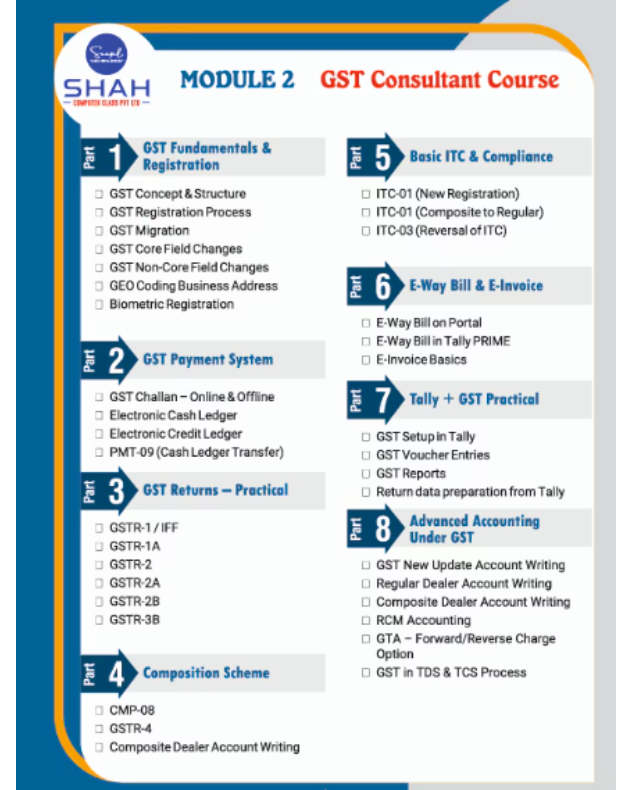
If you are comparing GST courses in Akota or elsewhere in Vadodara, ask whether the programme includes:
- GST fundamentals and terminology
- Invoice preparation
- Purchase and sales entries
- Input tax credit concepts
- Debit and credit notes
- Return-related data preparation
- Reconciliation exercises
- Case-based problem solving
- Accounting software practice
- Updates on changing procedures
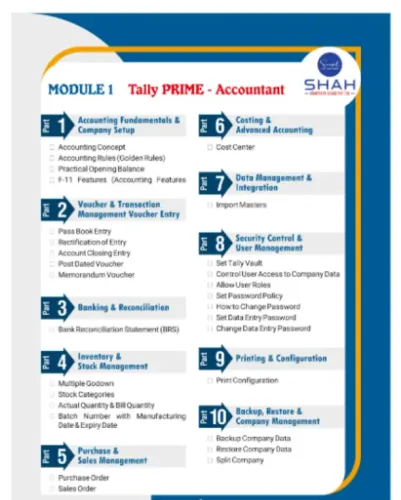
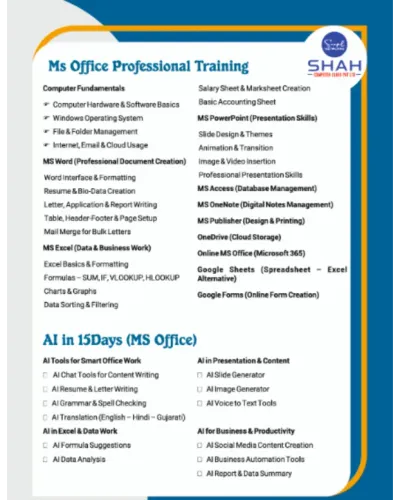
Shah Computer Class Pvt Ltd provides professional training for learners who want to strengthen accounting and taxation-related computer skills. Course value should be assessed through the depth of practical work, trainer guidance and opportunities to correct mistakes.
GST training becomes genuinely useful when learners can trace a transaction from its source document to the accounting entry and relevant report. That ability helps accountants produce cleaner records, support timely compliance and communicate discrepancies more effectively.