


Managing business finances accurately is essential for long-term success. While many small businesses initially rely on spreadsheets, handwritten records, or manual bookkeeping processes, growth often brings challenges that require more efficient systems. This is why many business owners compare traditional accounting methods with modern software solutions like QuickBooks.
Traditional accounting methods have served businesses for decades. They provide complete control over record-keeping and may work adequately for very small operations with limited transactions. However, as business activity increases, manual systems often become time-consuming and prone to errors.
QuickBooks Accounting Software offers a digital alternative designed to simplify financial management. It automates many accounting functions while providing real-time access to important business information. Features such as invoicing, expense tracking, bank reconciliation, financial reporting, and tax preparation help reduce administrative workload.
When comparing both approaches, several factors stand out:
Accuracy and Error Reduction
Manual bookkeeping requires repetitive data entry, increasing the possibility of calculation mistakes. Accounting software automatically performs calculations and validates entries, helping improve accuracy.
Time Efficiency
Traditional bookkeeping can consume significant time, especially during month-end reporting and tax preparation. QuickBooks streamlines these activities through automation and predefined workflows.
Financial Visibility
Business owners using spreadsheets often struggle to generate timely reports. QuickBooks provides instant access to profit and loss statements, balance sheets, cash flow reports, and customer payment tracking.
Scalability
As businesses grow, transaction volumes increase. Manual systems that work for a small business may become difficult to manage later. Accounting software is designed to handle expanding operational requirements.
Compliance Support
Tax regulations and financial reporting requirements continue evolving. Digital accounting tools help businesses maintain organized records and prepare compliance-related documentation more efficiently.
For entrepreneurs in Vadodara and across Gujarat, adopting modern accounting systems can support business growth while improving financial transparency. Manufacturing companies, retail businesses, service providers, and startups increasingly rely on software-driven accounting processes to remain competitive.
Learning QuickBooks is also beneficial for accounting professionals. Employers frequently seek candidates who understand popular accounting platforms because software knowledge enables faster onboarding and greater workplace productivity.
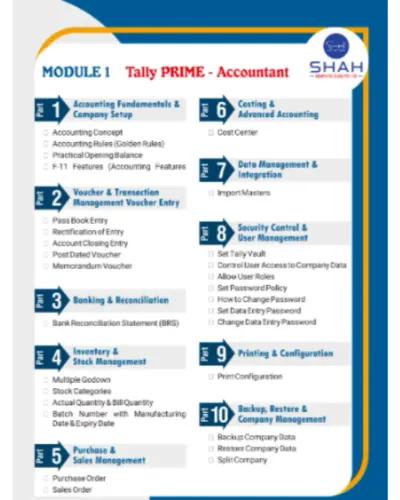
Training programs generally include practical modules covering:
- Company setup
- Customer and vendor management
- Expense tracking
- Financial reporting
- Tax management
- Payroll processing
- Banking transactions
Institutions such as Shah Computer Class Pvt Ltd often incorporate hands-on projects and real business scenarios to help learners understand how accounting software functions in professional environments.
The decision between traditional bookkeeping and software-based accounting depends on business size, transaction volume, and operational complexity. However, as organizations continue embracing digital transformation, accounting software proficiency is becoming an increasingly valuable skill for both business owners and finance professionals.